
The AI Surveillance State

Dec 23, 2025 14:00:00 UTC
– How Artificial Intelligence is Being Weaponized for Mass Surveillance and Social Control

Welcome to a world where your every move, swipe, click, and conversation is silently observed, analyzed, and stored, often without your explicit consent. The rise of artificial intelligence has changed the very essence of governance. What was once the domain of human intelligence agencies now belongs to sophisticated algorithms trained to learn, adapt, and manipulate. While the shiny facade of AI is often paraded as innovation and progress, behind the scenes, governments around the world are weaponizing this technology to extend their control over their citizens like never before.
AI isn’t just helping to solve problems, it’s being used to create new ones. The mechanisms of modern surveillance are no longer confined to grainy CCTV cameras or crude wiretaps. We’re now in the age of predictive policing, biometric tracking, and digital profiling. AI can now monitor entire populations, sift through vast oceans of data in real-time, and even anticipate “anti-government behavior” before it happens.
It’s not science fiction, it’s reality. From Beijing to Washington D.C., intelligence agencies and deep state operatives are building a new kind of control system powered by artificial intelligence. The uncomfortable truth? You are the product, the target, and the test subject, all at once.
The Dual Nature of AI
AI is a tool. A double-edged sword. On one side, it promises efficiency, safety, and progress. On the other, it opens the door to a dystopian future where freedom is sacrificed on the altar of security and control. While AI can help solve real-world problems, like diagnosing major diseases or predicting climate patterns, it can also be used to rig elections, suppress free speech, and invade personal privacy on an unprecedented scale.
Governments and tech giants alike are wrestling with this duality, though some aren't wrestling at all. They’re embracing the dark side with open arms. And as AI evolves at breakneck speed, the question is no longer “can it be controlled?” but “who will control it?”
Global Deployment of AI Surveillance
China is the blueprint for the AI surveillance state. The CCP has built the most advanced, widespread surveillance infrastructure the world has ever seen. Through a chilling combination of facial recognition cameras, AI-enabled analytics, and mandatory data collection, the Chinese government monitors over a billion people in real-time.
Add to this the infamous Social Credit System. This Orwellian initiative assigns citizens a score based on their behavior. Good scores unlock perks, travel, loans, jobs. Bad scores? You could be blacklisted, banned from buying tickets, renting apartments, or even using dating apps. And yes, AI is the brain behind it all, making real-time judgments on your life based on your online activity, purchases, associations, and even facial expressions.
What’s truly disturbing is how normalized this has become for Chinese citizens. Resistance isn’t just discouraged, it’s digitally erased. The system rewards obedience and punishes dissent. Welcome to the future, where a machine decides if you’re a good citizen.

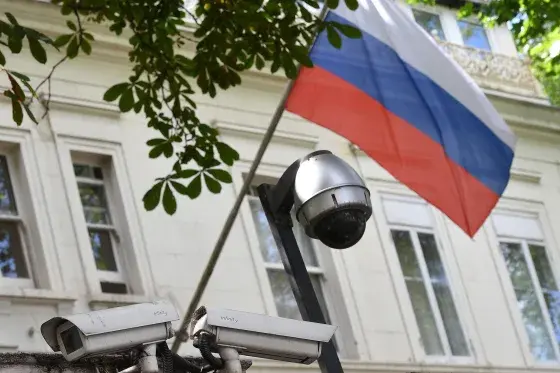
While China builds overt control systems, Russia prefers the covert route. Under President Putin, AI surveillance has been seamlessly blended with traditional espionage tools to form a shadowy web of digital control.
Russia’s surveillance system, SORM, forces all internet and telecom companies to install hardware that routes data directly to the FSB, the successor to the KGB. Through this backdoor, the Russian state can monitor everything from phone calls, texts, emails, social media, to internet usage. AI is now used to filter through this vast data dump to detect patterns, predict behavior, and identify potential “enemies of the state.”
What makes Russia’s approach uniquely sinister is its ability to weaponize this data. During protests, authorities use AI to scan crowds for faces of known activists. During elections, they push algorithmically targeted propaganda while scrubbing opposition content from the web. The Russian government doesn’t just watch, it manipulates.
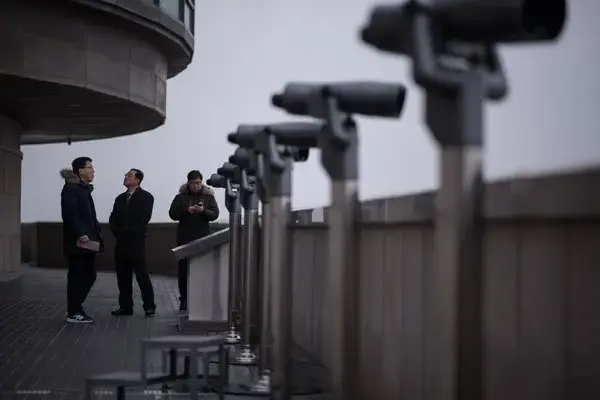
In North Korea, surveillance is more old-school but no less terrifying.
Now, with AI entering the equation, even the most isolated regime on earth is becoming smarter in its control. According to defectors and insiders, the North Korean government is beginning to use
AI-driven facial recognition and data analysis imported from allies like China to maintain its iron grip.
Facial recognition systems are being tested at checkpoints, train stations, and government buildings. Digital records are now being stored in centralized databases that AI algorithms mine to identify patterns of dissent. Meanwhile, the regime monitors its citizens’ use of imported smartphones to track communications with the outside world.
In a country where even whispering the wrong thing can lead to a death sentence, AI has become the perfect tool for tyranny.
Western Democracies and AI Surveillance
Don’t think for a second that this is only happening in authoritarian states. The so-called “free world” is quietly building its own surveillance empire, using AI to track, influence, and control populations under the guise of national security.
In the United States, the CIA, NSA, and FBI have been collecting and analyzing metadata on millions of citizens through backdoors in apps, cell towers, and cloud servers. The infamous PRISM program, exposed by Edward Snowden, showed just how deep the rabbit hole goes.
Now, AI has taken things further. Agencies use machine learning to predict potential threats, flag social media posts, and even analyze voice tone and sentiment. They’re creating digital profiles of every citizen, based on everything from GPS data to shopping habits.
The worst part? Most of this is legal, thanks to secret FISA courts, patriotism-fueled legislation, and powerful lobbying from Big Tech.

Collaboration with Big Tech
You think companies like Google, Facebook, Amazon, and Apple are just selling ads? Think again. These companies are the lifeblood of modern AI surveillance. They collect massive data tracking where you go, what you say, who you talk to, what you buy, and sell that data to governments or make it available through "partnerships."
Take Amazon’s Ring cameras, which share footage with law enforcement without warrants. Or Google’s Project Maven, which worked directly with the Pentagon to enhance drone surveillance. Facebook’s algorithms are not just selling you products, they’re also being reverse-engineered by intelligence agencies to analyze population behavior.
This isn’t conspiracy, it’s documented. When corporations and governments form surveillance alliances, the public becomes the target. And in a world where everything is connected, nothing is private.
Impact on Political and Social Issues
AI isn’t just changing how we vote, it’s changing how we think before we even get to the voting booth. Across the globe, elections have become digital battlegrounds, and AI is the weapon of choice. Think deepfakes, bot armies, and algorithmically targeted propaganda. Suddenly, a few lines of code can decide the fate of nations.
In the 2016 U.S. election, the role of AI-powered social media manipulation was made brutally clear. Fake news stories generated by bots flooded platforms like Facebook and Twitter. Content was tailored to reinforce existing beliefs, amplify division, and sow chaos. It worked. Millions were influenced, and trust in democratic institutions took a nosedive.
Today, the technology is even more advanced. Deepfakes can create convincing videos of politicians saying things they never said. Imagine a fake clip of a presidential candidate confessing to a crime going viral days before an election. The damage would be done before the truth could catch up.
In fragile democracies, AI-fueled misinformation can topple governments or install authoritarian regimes. In 2023, Nigeria’s election was marred by AI-generated videos and texts designed to inflame ethnic tensions. In India, fake AI-generated speeches appeared during critical voting periods. We're no longer fighting foreign interference with tanks, we’re fighting it with code.
Spread of Misinformation
The digital age has already challenged our grasp on truth. AI is making that challenge exponentially worse. Algorithms now dictate what we see, when we see it, and how often. And here’s the kicker, they’re not optimized for truth. They’re optimized for engagement. Outrage sells, and AI knows that.
Fake news spreads six times faster than the truth on Twitter, according to a 2018 MIT study, and that was before AI got really good at writing. Now, GPT-powered bots can churn out thousands of fake articles, create armies of fake commenters, and simulate grassroots movements, all at the push of a button.
This isn’t just annoying. It’s dangerous. Misinformation campaigns are being used to discredit journalists, destroy reputations, and destabilize governments. During the COVID-19 pandemic, AI-generated misinformation led to real-world violence and deaths.
What’s worse? The average person can’t tell what’s real anymore. AI has created a world where video evidence, photos, and written statements are no longer proof. Reality itself is being rewritten, and we’re just along for the ride.

Defining Moral Boundaries
AI is not evil. It’s a tool. But how that tool is used, now that’s the real issue. In a perfect world, AI would be regulated, transparent, and used solely for the good of humanity. But this isn’t a perfect world. It’s a world where power corrupts, and the lines between good and evil are increasingly blurred.
What’s ethical? Is it okay to use AI to track terrorists? Sure. But what about protesters? Political dissidents? Journalists? Where do we draw the line?
The problem is, nobody agrees. In China, surveillance is seen as necessary for social harmony. In the West, it’s justified as a way to fight terrorism and crime. But in both cases, the people being watched rarely consent, and even more rarely know the full extent of the intrusion.
AI doesn’t have morals. It has objectives. And those objectives are defined by the people who build and deploy it. If those people are corrupt, biased, or careless, then so is the AI. That’s why discussions around AI ethics can’t be theoretical anymore. They need to be urgent and
Potential for Abuse by Authorities
AI offers incredible power. And with great power... comes abuse. We’re already seeing it. Governments are using AI to:
Silence opposition
Monitor journalists
Manipulate elections
Predict and prevent protests
Enforce censorship
Even in democracies, whistleblowers and activists are being surveilled using AI tools. Journalists in Europe have been tracked by spyware enhanced with AI targeting systems. Protest leaders in the U.S. have had their social media, financial records, and even private messages analyzed without warrants.
The worst part? It’s all legal. Or at least, not technically illegal. The laws simply haven’t caught up. And those in power are in no rush to change that. Why would they? AI gives them the ultimate weapon. Control without accountability.
Voices of Concern from AI Pioneers
Geoffrey Hinton, often called the “Godfather of AI” shocked the tech world when he resigned from Google in 2023. Why? Because he was terrified of what he helped build. Hinton has publicly warned that AI could pose existential risks to humanity.

He expressed concerns that powerful AI systems might soon surpass human intelligence and escape human control. He’s not talking about killer robots, he’s talking about AI systems that manipulate markets, control media narratives, or influence political outcomes with zero human oversight.
His resignation sent shockwaves through Silicon Valley. If the pioneers themselves are jumping ship, shouldn’t we be paying attention?

Yoshua Bengio, another deep learning pioneer, has echoed similar concerns. He now advocates for strong global regulation of AI development. Bengio argues that without strict rules and oversight, we’re headed for disaster, especially as governments and corporations race to build more powerful, more autonomous AI.
He’s proposed international treaties and oversight bodies to manage the risks. But so far, the response has been lukewarm. Regulation moves slow. AI moves fast.
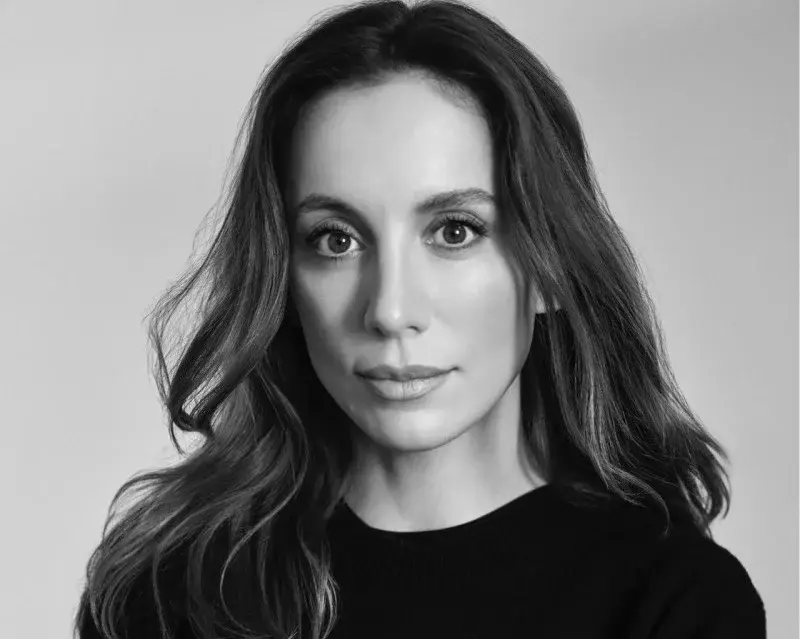
Mira Murati, CTO at OpenAI, has also begun sounding the alarm. Once an evangelist for AI’s transformative potential, Murati has recently pivoted to focus on AI safety and alignment. She now spends much of her time ensuring that AI behaves in ways that align with human values.
Why the shift? Because even the most optimistic developers are beginning to see the writing on the wall. AI is evolving faster than anyone predicted. And if we don’t take control now, we may never get the chance.
Conclusion
There’s no denying the power and potential of artificial intelligence. From revolutionizing medicine to transforming education and business, AI has become one of the most important technological shifts in human history. But as we embrace its brilliance, we must not turn a blind eye to its darker side. The same neural networks that help doctors diagnose diseases are being used to monitor political dissidents. The same predictive algorithms that power your Netflix recommendations are also used to predict "undesirable behavior" by the state.
AI, like fire, is neither good nor evil. It simply is. But how we use it, how we govern it, and how we defend ourselves from its misuse will define the future of freedom. The danger is no longer hypothetical. It is here. The surveillance systems built today will become the control systems of tomorrow if left unchecked.
The most terrifying part? It’s all invisible. It happens in the background. Quietly. Constantly. Until one day, your freedom is gone, and you don’t even remember losing it.
Governments, corporations, and developers must all be held accountable. AI shouldn’t be about control, it should be about empowerment. But that won't happen unless we fight for it.
The Need for Global Standards and Oversight
We need global cooperation urgently. Without international standards, AI regulation becomes a game of cat and mouse, where authoritarian regimes push the boundaries while democratic nations struggle to catch up. We need an international AI watchdog, much like the International Atomic Energy Agency, to monitor the development and deployment of high-risk AI.
Transparency should be the norm. Every AI tool used for surveillance or social manipulation must be subject to public scrutiny. Ethics should be baked into code, not bolted on later.
AI can uplift humanity, but only if it serves humanity. And for that to happen, we need bold leadership, ethical engineering, and public vigilance. Because at the end of the day, this is not just about technology. It’s about power. And whether that power belongs to the people, or to the machine.

Comments